← 返回綜合能力分析全部試卷

DSE PAPER 3 · PART B2 · 2013

2013 B2 Data File + Question-Answer Book

所有頁面均已依原卷重建為原生 HTML,含可選取文字、原件版式和答題欄;可展開原卷影像核對。

Data File · 第 1 頁
原生文字重建
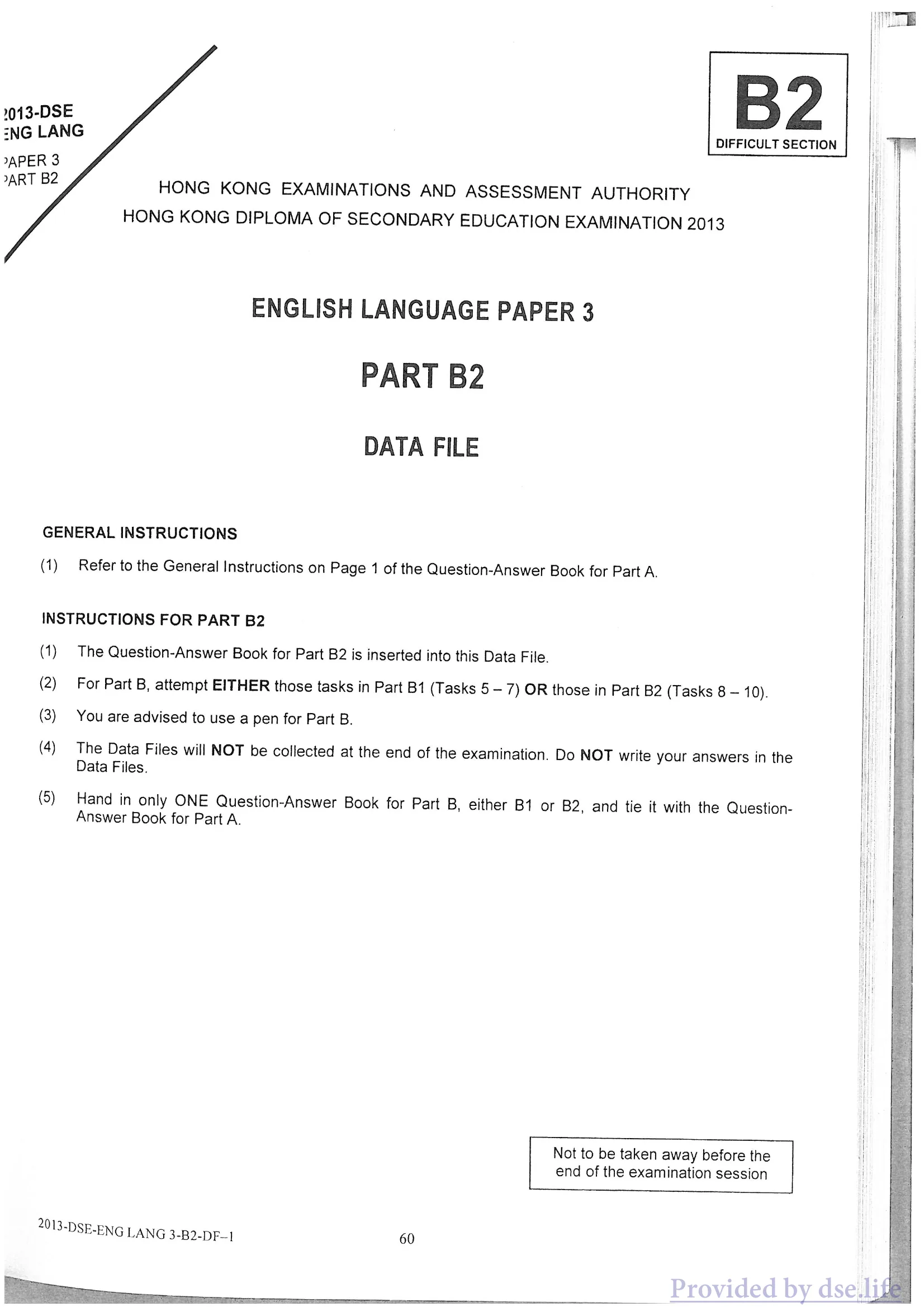
2013-DSE
ENG LANG

PAPER 3
PART B2
HONG KONG EXAMINATIONS AND ASSESSMENT AUTHORITY
HONG KONG DIPLOMA OF SECONDARY EDUCATION EXAMINATION 2013
B2DIFFICULT SECTION

ENGLISH LANGUAGE PAPER 3

PART B2

DATA FILE

GENERAL INSTRUCTIONS

  1. Refer to the General Instructions on Page 1 of the Question-Answer Book for Part A.

    請參閱甲部問答冊第 1 頁的一般指示。

INSTRUCTIONS FOR PART B2

  1. The Question-Answer Book for Part B2 is inserted into this Data File.

    乙部二問答冊夾於本資料檔內。

  2. For Part B, attempt EITHER those tasks in Part B1 (Tasks 5 – 7) OR those in Part B2 (Tasks 8 – 10).

    乙部須選答乙部一(任務 5 至 7)或乙部二(任務 8 至 10),兩者選其一。

  3. You are advised to use a pen for Part B.

    建議乙部使用原子筆作答。

  4. The Data Files will NOT be collected at the end of the examination. Do NOT write your answers in the Data Files.

    考試結束時資料檔不會收回。請勿在資料檔內書寫答案。

  5. Hand in only ONE Question-Answer Book for Part B, either B1 or B2, and tie it with the Question-Answer Book for Part A.

    乙部只須交一份問答冊(乙部一或乙部二),並與甲部問答冊綁在一起。

2013-DSE-ENG LANG 3-B2-DF-1Not to be taken away before the end of the examination session
核對原卷影像
Data File original page 10
原卷影像供核對文字和版面
Data File · 第 2 頁
原生文字重建

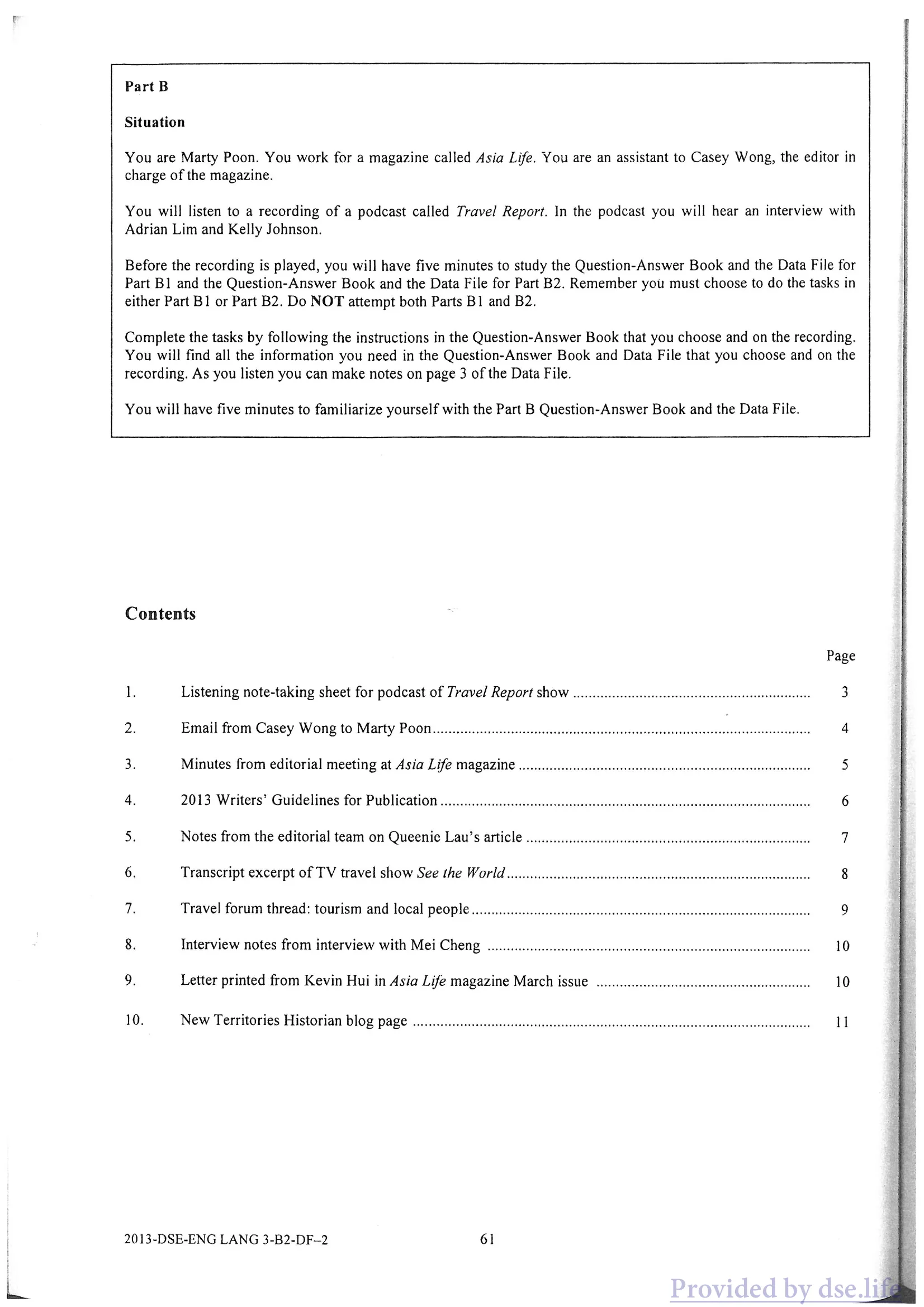
Part B

Situation

You are Marty Poon. You work for a magazine called Asia Life. You are an assistant to Casey Wong, the editor in charge of the magazine.

你是 Marty Poon,在《Asia Life》雜誌工作,擔任負責編輯 Casey Wong 的助理。

You will listen to a recording of a podcast called Travel Report. In the podcast you will hear an interview with Adrian Lim and Kelly Johnson.

你將聆聽播客《Travel Report》,其中有 Adrian Lim 和 Kelly Johnson 的訪問。

Before the recording is played, you will have five minutes to study the Question-Answer Book and the Data File for Part B1 and the Question-Answer Book and the Data File for Part B2. Remember you must choose to do the tasks in either Part B1 or Part B2. Do NOT attempt both Parts B1 and B2.

錄音前有五分鐘閱讀乙部一及乙部二的問答冊和資料檔;只須選答其中一部,不要兩部都做。

Complete the tasks by following the instructions in the Question-Answer Book that you choose and on the recording. You will find all the information you need in the Question-Answer Book and Data File that you choose and on the recording. As you listen you can make notes on page 3 of the Data File.

按照所選問答冊及錄音的指示完成任務。所需資料在問答冊、資料檔和錄音中;聆聽時可在資料檔第 3 頁記筆記。

You will have five minutes to familiarize yourself with the Part B Question-Answer Book and the Data File.

現在有五分鐘熟悉乙部問答冊和資料檔。

核對原卷影像
Data File original page 11
原卷影像供核對文字和版面
Data File · 第 3 頁
原生文字重建

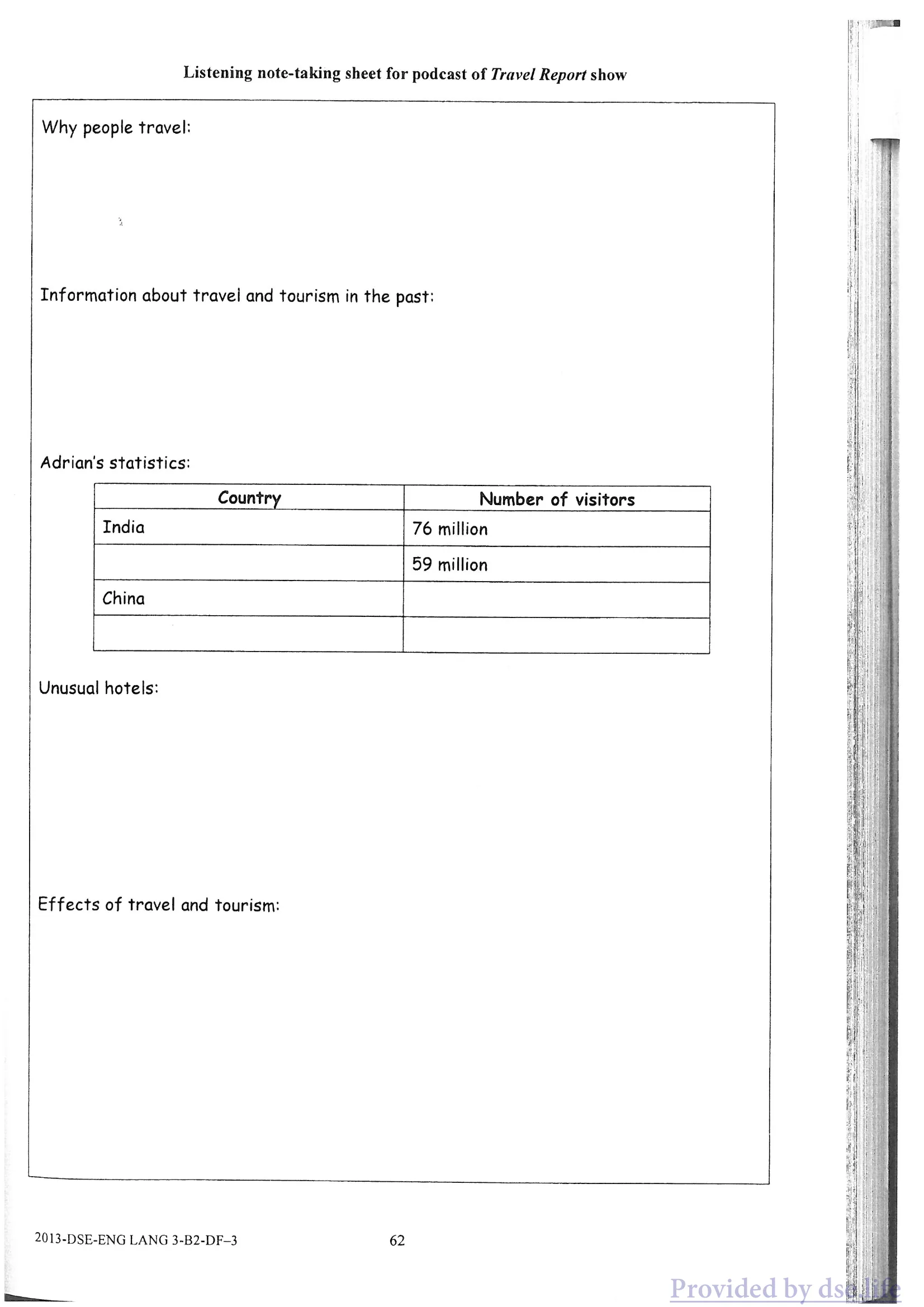
Listening note-taking sheet for podcast of Travel Report show

Why people travel

人們旅遊的原因

Information about travel and tourism in the past

昔日旅遊資訊

Adrian’s statistics

Adrian 的統計資料

CountryNumber of visitors
India76 million
China59 million

Unusual hotels

獨特的酒店

Effects of travel and tourism

旅遊的影響

核對原卷影像
Data File original page 12
原卷影像供核對文字和版面
Data File · 第 4 頁
原生文字重建
核對原卷影像
Data File original page 13
原卷影像供核對文字和版面
Data File · 第 5 頁
原生文字重建

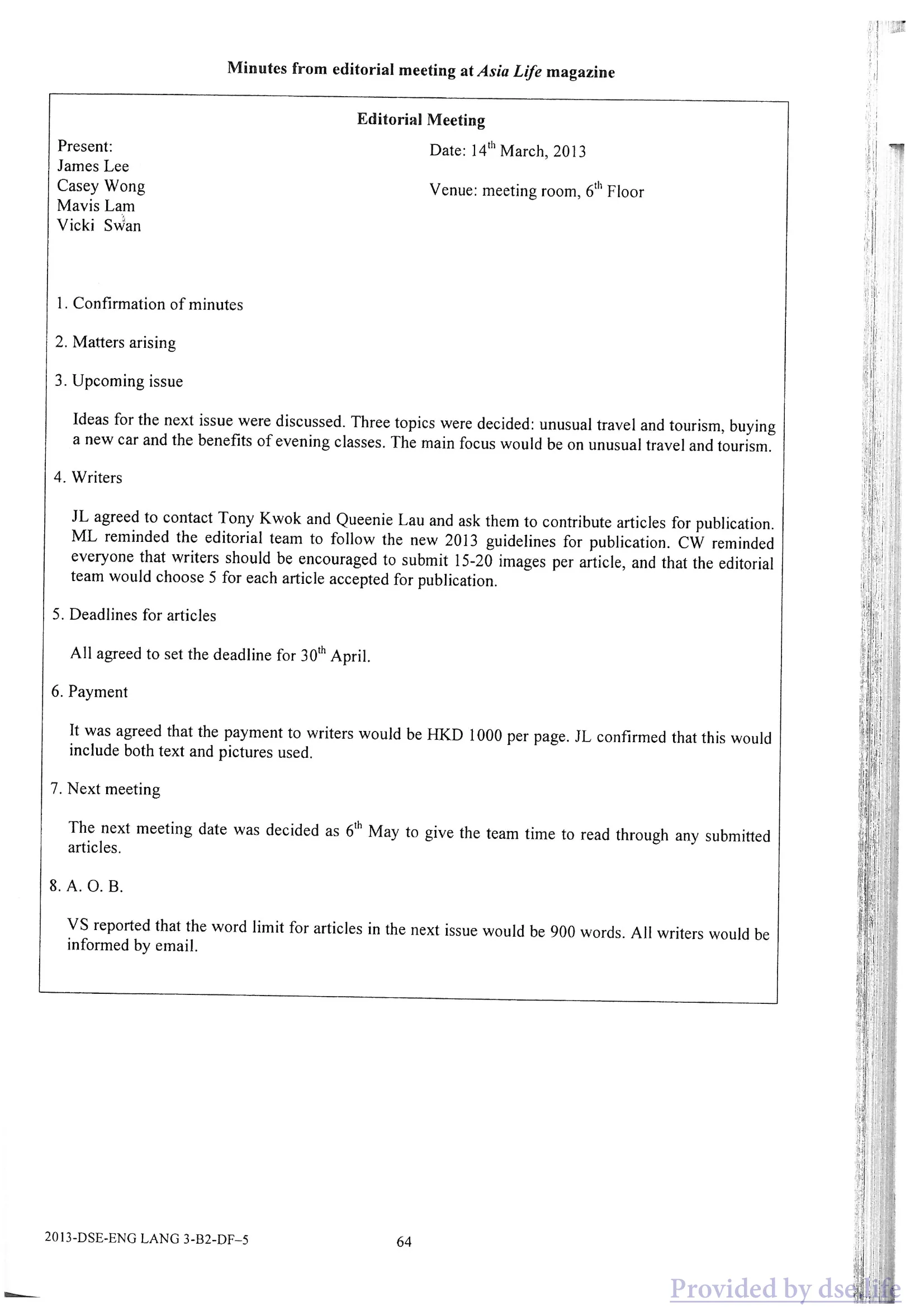
Minutes from editorial meeting at Asia Life magazine

Editorial Meeting

Present
James Lee · Casey Wong · Mavis Lam · Vicki Swan
Date
14th March, 2013
Venue
meeting room, 6th Floor

1. Confirmation of minutes

3. Upcoming issue

Ideas for the next issue were discussed. Three topics were decided: unusual travel and tourism, buying a new car and the benefits of evening classes. The main focus would be on unusual travel and tourism.

會議決定下期雜誌的三個題目:非一般的旅遊、購買新車及夜間課程的好處;主題以非一般的旅遊為主。

4. Writers

JL agreed to contact Tony Kwok and Queenie Lau and ask them to contribute articles for publication. ML reminded the editorial team to follow the new 2013 guidelines for publication. CW reminded everyone that writers should be encouraged to submit 15-20 images per article, and that the editorial team would choose 5 for each article accepted for publication.

JL 將聯絡 Tony Kwok 和 Queenie Lau 邀稿。ML 提醒編輯組遵守 2013 年的新投稿指引。CW 提醒大家鼓勵作者每篇提交 15 至 20 張圖片,再由編輯組選出 5 張刊登。

5. Deadlines for articles

All agreed to set the deadline for 30th April.

各人同意截稿日期定為 4 月 30 日。

6. Payment

It was agreed that the payment to writers would be HKD 1000 per page. JL confirmed that this would include both text and pictures used.

稿酬每頁港幣 1,000 元,已包括採用的文字及圖片。

7. Next meeting

The next meeting date was decided as 6th May to give the team time to read through any submitted articles.

下次會議定於 5 月 6 日,讓編輯組有時間閱讀收到的稿件。

8. A. O. B.

VS reported that the word limit for articles in the next issue would be 900 words. All writers would be informed by email.

VS 說下期文章字數上限為 900 字;將以電郵通知所有作者。

核對原卷影像
Data File original page 14
原卷影像供核對文字和版面
Data File · 第 6 頁
原生文字重建

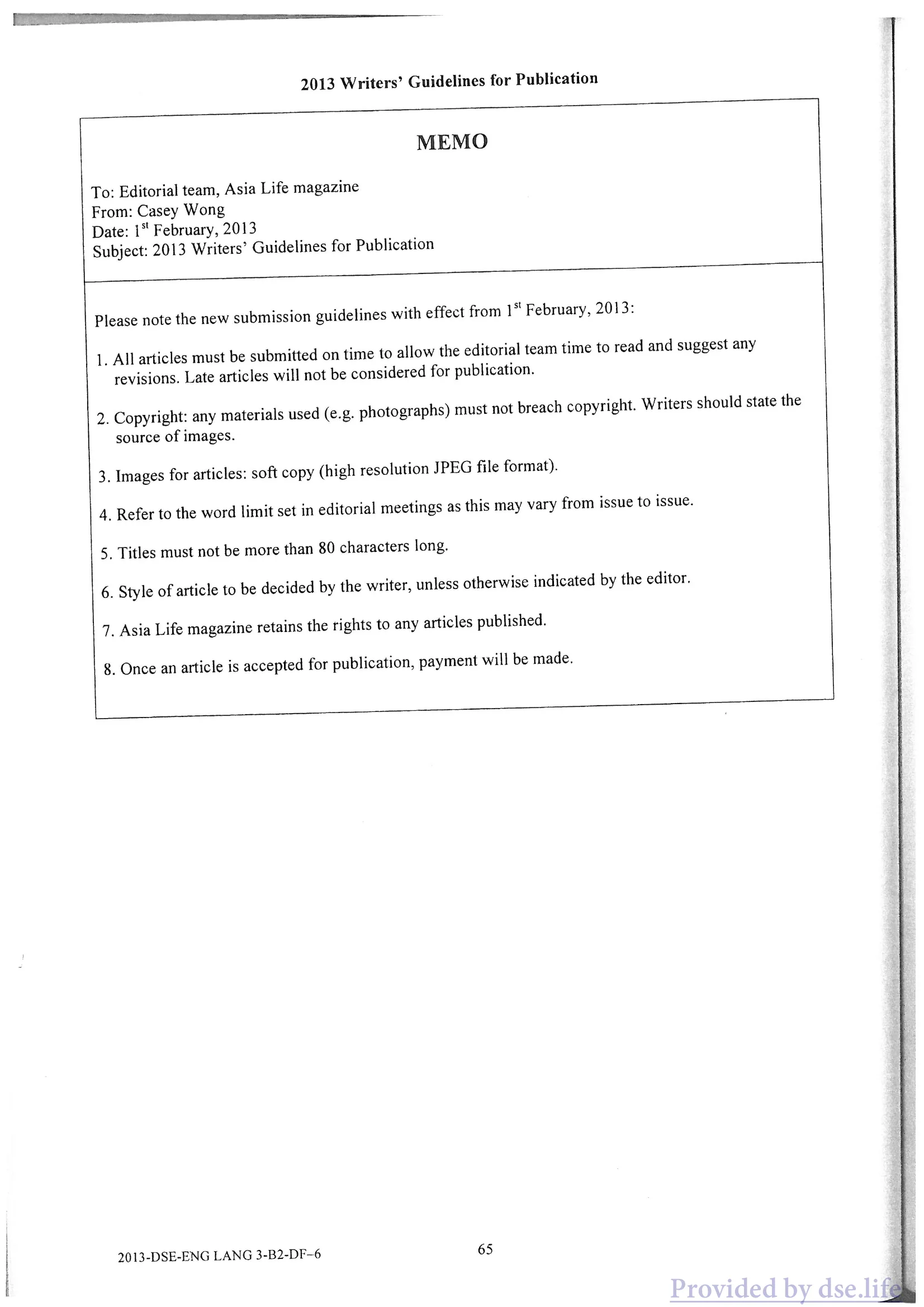
2013 Writers’ Guidelines for Publication

MEMO

To: Editorial team, Asia Life magazine

From: Casey Wong

Date: 1st February, 2013

Subject: 2013 Writers’ Guidelines for Publication

Please note the new submission guidelines with effect from 1st February, 2013:

以下新投稿指引由 2013 年 2 月 1 日起生效:

  1. All articles must be submitted on time to allow the editorial team time to read and suggest any revisions. Late articles will not be considered for publication.

    所有文章必須準時提交,以便編輯組閱讀及提出修改建議;逾期稿件不予考慮。

  2. Copyright: any materials used (e.g. photographs) must not breach copyright. Writers should state the source of images.

    版權:使用的材料(例如照片)不得侵權,作者須註明圖片來源。

  3. Images for articles: soft copy (high resolution JPEG file format).

    圖片須提交高解像度 JPEG 電子檔。

  4. Refer to the word limit set in editorial meetings as this may vary from issue to issue.

    須按編輯會議為該期訂定的字數上限撰稿;每期可能不同。

  5. Titles must not be more than 80 characters long.

    標題不得超過 80 個字元。

  6. Style of article to be decided by the writer, unless otherwise indicated by the editor.

    除非編輯另有指示,文章風格由作者決定。

  7. Asia Life magazine retains the rights to any articles published.

    《Asia Life》保留已刊登文章的權利。

  8. Once an article is accepted for publication, payment will be made.

    稿件獲接納刊登後才支付稿酬。

核對原卷影像
Data File original page 15
原卷影像供核對文字和版面
Data File · 第 7 頁
原生文字重建

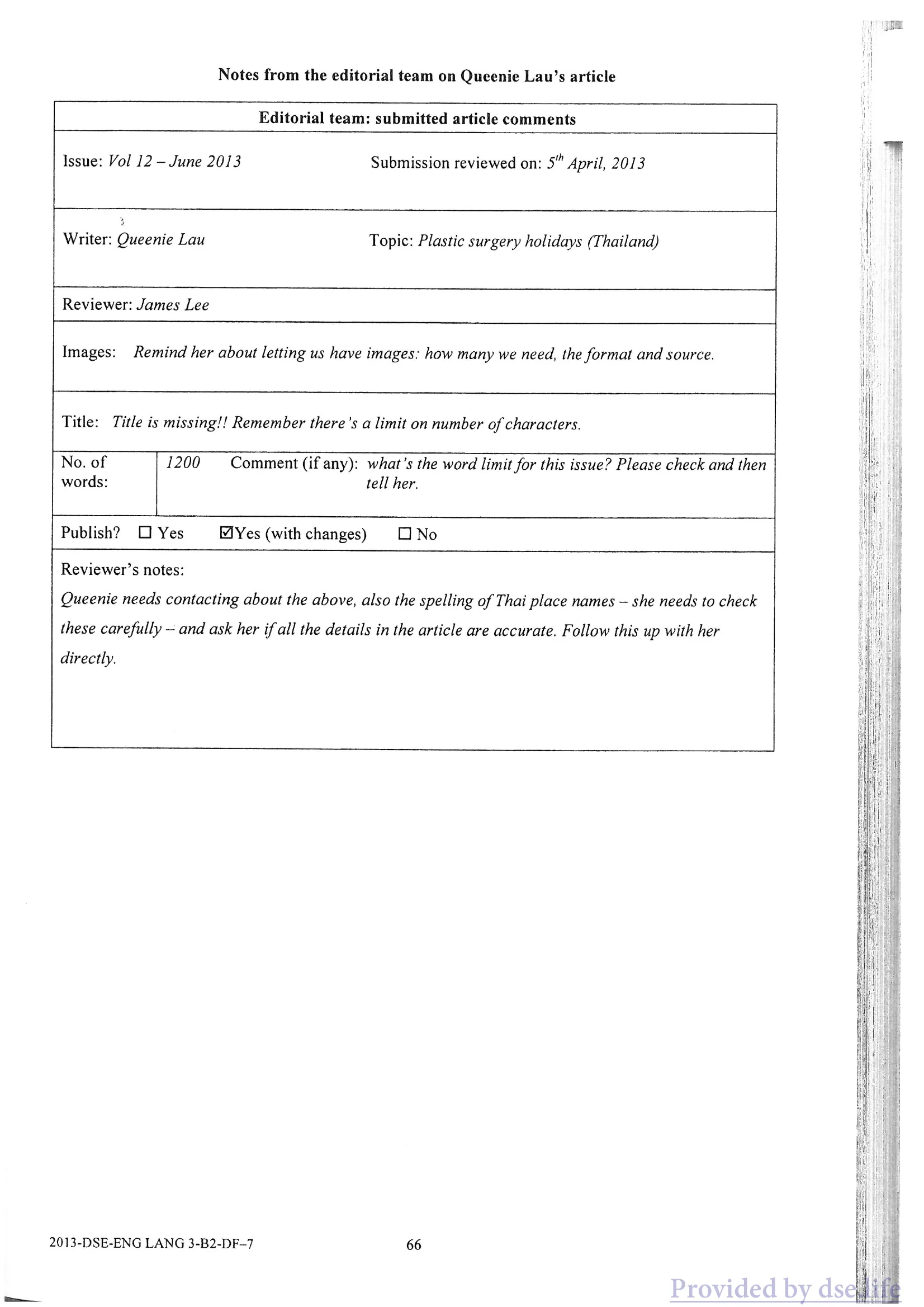
Notes from the editorial team on Queenie Lau’s article

Editorial team: submitted article comments

Issue: Vol 12 – June 2013
Submission reviewed on: 5th April, 2013
Writer: Queenie Lau
Topic: Plastic surgery holidays (Thailand)
Reviewer: James Lee
No. of words: 1200

Images: Remind her about letting us have images: how many we need, the format and source.

圖片:提醒她提交所需數量、格式及來源。

Title: Title is missing!! Remember there’s a limit on number of characters.

標題:仍未提供;須遵守字元上限。

No. of words: 1200 Comment (if any): what’s the word limit for this issue? Please check and then tell her.

字數:1,200 字。須查明該期字數上限,再告訴她。

Publish? ☐ Yes  ☑ Yes (with changes)  ☐ No

Reviewer’s notes:

Queenie needs contacting about the above, also the spelling of Thai place names – she needs to check these carefully – and ask her if all the details in the article are accurate. Follow this up with her directly.

請聯絡 Queenie 跟進上述問題,也請她仔細核對泰國地名拼寫,並確認文章所有細節準確。

核對原卷影像
Data File original page 16
原卷影像供核對文字和版面
Data File · 第 8 頁
原生文字重建

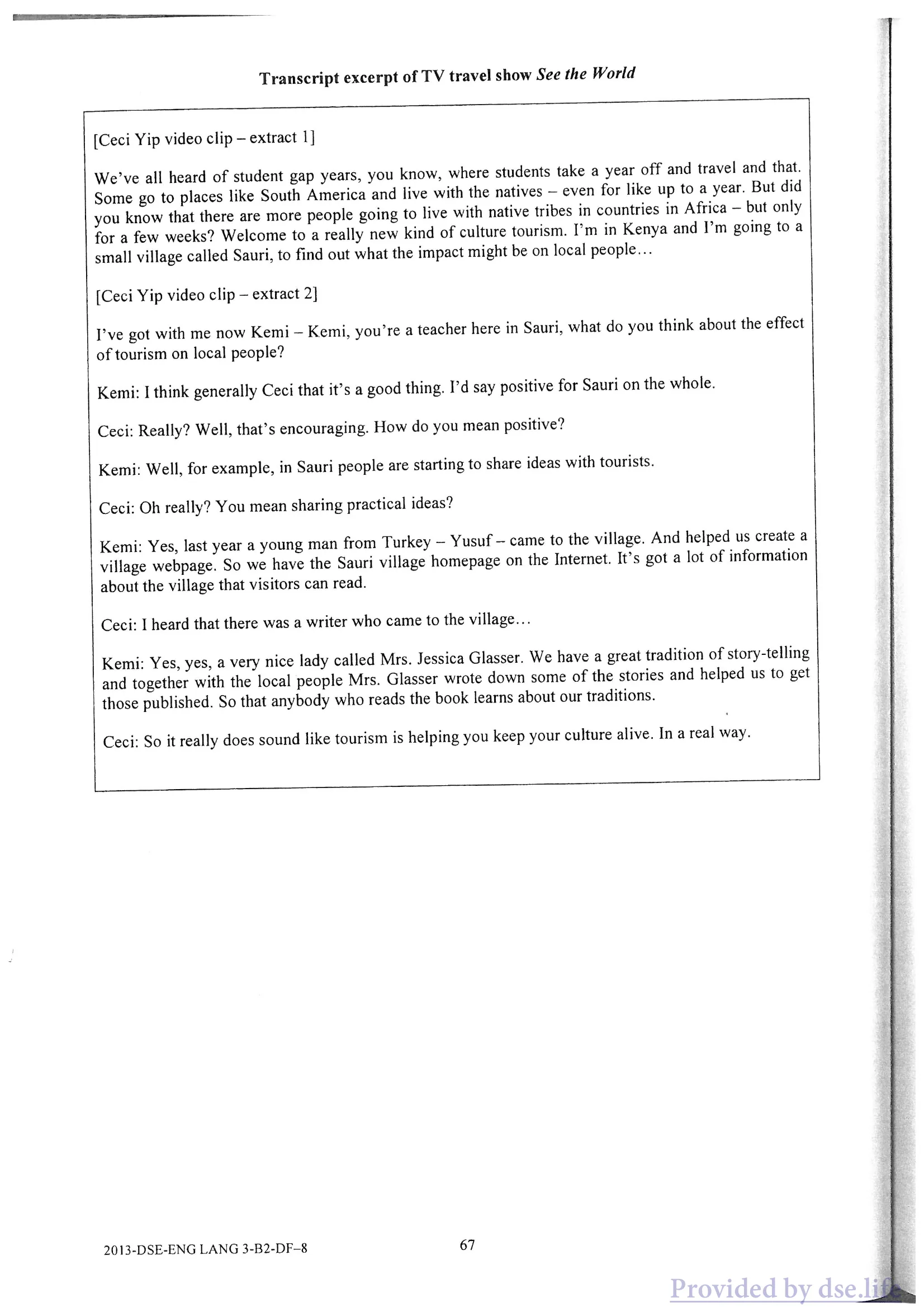
Transcript excerpt of TV travel show See the World

[Ceci Yip video clip – extract 1]

We’ve all heard of student gap years, you know, where students take a year off and travel and that. Some go to places like South America and live with the natives – even for like up to a year. But did you know that there are more people going to live with native tribes in countries in Africa – but only for a few weeks? Welcome to a really new kind of culture tourism. I’m in Kenya and I’m going to a small village called Sauri, to find out what the impact might be on local people...

我們都聽過學生休學一年四處旅遊,有些人甚至到南美洲與原住民同住一年。如今也有人前往非洲部落居住數星期。我在肯尼亞的 Sauri 村,想了解這種新文化旅遊對當地人的影響。

[Ceci Yip video clip – extract 2]

I’ve got with me now Kemi – Kemi, you’re a teacher here in Sauri, what do you think about the effect of tourism on local people?

我現在和 Sauri 的教師 Kemi 一起。你認為旅遊對當地居民有甚麼影響?

Kemi

I think generally Ceci that it’s a good thing. I’d say positive for Sauri on the whole.

整體來說是好事;對 Sauri 大致有正面影響。

Ceci

Really? Well, that’s encouraging. How do you mean positive?

真的嗎?這很令人鼓舞。正面影響體現在哪些方面?

Kemi

Well, for example, in Sauri people are starting to share ideas with tourists.

例如 Sauri 的居民開始與旅客交流想法。

Ceci

Oh really? You mean sharing practical ideas?

你是說分享實用知識嗎?

Kemi

Yes, last year a young man from Turkey – Yusuf – came to the village. And helped us create a village webpage. So we have the Sauri village homepage on the Internet. It’s got a lot of information about the village that visitors can read.

對。去年一位來自土耳其的年輕人 Yusuf 來村裡,協助建立 Sauri 村網站,讓訪客在線上了解村莊。

Ceci

I heard that there was a writer who came to the village...

我聽說有位作家也來過村裡……

Kemi

Yes, yes, a very nice lady called Mrs. Jessica Glasser. We have a great tradition of story-telling and together with the local people Mrs. Glasser wrote down some of the stories and helped us to get those published. So that anybody who reads the book learns about our traditions.

對,Jessica Glasser 女士很友善。村裡有深厚的說故事傳統;她與居民一起把故事記錄並出版,讓讀者認識我們的傳統。

Ceci

So it really does sound like tourism is helping you keep your culture alive. In a real way.

聽起來旅遊確實有助你們以實際方式保存文化。

核對原卷影像
Data File original page 17
原卷影像供核對文字和版面
Data File · 第 9 頁
原生文字重建

Travel forum thread: tourism and local people

WR Wildrovers  File  Edit  View  Go  Bookmarks  Tools  Help
http://www.wildrovers.org/forum/tourism-local_people/

Tourism and local people

Login  Join  Page 1 2 3 4  Next  Last Post

Mikey8#1 · 29 Nov 12 13:03

I’ve been checking out this immersion holiday stuff. Anyone else heard of that?

我一直在研究深入體驗式假期。有人聽過嗎?

Traveldude#2 · 10 Dec 12 17:17

Yeah. It’s when you go and live like a local person – you can go and live with indigenous people in South America, stuff like that. But doing this is the same as all tourism, it changes the local culture ☹

就是像當地人一樣生活,例如住在南美洲原住民社區。不過它跟其他旅遊一樣,也會改變當地文化。

BlogGal#3 · 10 Dec 12 19:35

I’ll never go on holiday. Any kind of tourism is really unfair. Like, I mean the indigenous people will never get to visit the tourists’ countries. That must really affect their self-esteem.

我永遠不去度假。任何旅遊都不公平,當地原住民未必能到訪遊客的國家,這一定會影響他們的自尊。

Africa Anna#4 · 11 Dec 12 20:52

BlogGal: It is fair – at least they have some money because tourists go to their countries. They can buy things they really need... say like education for their kids.

但至少旅客帶來收入,居民可購買真正需要的東西,例如讓孩子接受教育。

Erica8#5 · 12 Dec 12 14:44

No. BlogGal’s kind of right. Some tourists just laugh at the local people. I even heard that one group of tourists were throwing money and food at some native dancers. Like they were at a zoo.

有些旅客嘲笑當地人;我甚至聽過有人向原住民舞者扔錢和食物,好像在動物園一樣。

BlogGal#6 · 12 Dec 12 20:34

Thanks Erica8 ☺ But I want to say something about the money. Africa Anna, I think the risk is that the local people will start to over-depend on tourists and their money. That can’t be a good thing.

謝謝 Erica8。不過居民也可能過度依賴旅客及其金錢。

Africa Anna#7 · 12 Dec 12 21:39

BlogGal, yeah but more tourism = more jobs!! Pure and simple. Imagine you live in a poor country you can get a job easier because you’re working with tourists.

旅遊增加就有更多工作;在較貧窮國家,居民可因旅遊業更容易就業。

Erica8#8 · 13 Dec 12 18:30

There is one good thing though – governments can use the money from us tourists to help the people – like when I was in Africa, I saw lots of government projects to bring clean water into poor areas. That’s gotta be good, right?

政府還可運用旅客帶來的收入幫助居民,例如為貧困地區提供清潔食水。

CoolKarma#9 · 16 Dec 12 23:40

@Erica8, yeah, everyone should have access to clean water. Hey guys, I’ve got a question though: Do local people get education from tourism?

人人都應有清潔食水。我想問:當地人能從旅遊中學到甚麼嗎?

Erica8#10 · 17 Dec 12 18:59

Not sure what you mean CoolKarma ☹

我不太明白你的意思。

CoolKarma#11 · 17 Dec 12 20:50

@Erica8 – I mean like the local people learn some things from tourists, like language – how many times have you been to a country and the local people can speak some English? Right? That comes from speaking to tourists.

例如當地人跟旅客交談後學會外語。你在別國遇過會說英語的居民吧?

核對原卷影像
Data File original page 18
原卷影像供核對文字和版面
Data File · 第 10 頁
原生文字重建

Interview notes from interview with Mei Cheng

Hong Kong Tourism: Past and Present

Interviewee: Mei Cheng  Date of interview: 3rd March, 2013

Location: Dragon Hotel Hong Kong

Personal Background: Age = 97 Father – manager Dragon Hotel (DH) Mei grew up in DH

個人背景:Mei 現年 97 歲,父親曾任 Dragon Hotel 經理,她在酒店長大。

100th Anniversary of the DH DH opened in 1913 – 125 staff, 48 rooms Used by Japanese army in 2nd World War 100th Anniversary Ball planned for October 2013 – Mei to be guest of honour Opening of new spa facilities in December

酒店百週年:1913 年開業,有 125 名員工和 48 間客房;二戰時曾被日軍使用。2013 年 10 月將舉行百週年舞會,由 Mei 擔任嘉賓;12 月開設新水療設施。

Transport in 1920’s DH had stables for horses – like other hotels – not like now! People used to hire horse + carriage (now taxis – she doesn’t like taxis = pollution).

1920 年代的交通:酒店跟其他酒店一樣設馬廄,旅客租用馬車;現在使用的士,但她不喜歡其污染。

Types of people Interntnl tourists then – richer – more glamourous – DH had extra rooms for servants: when she was a girl always saw tourists travel with servants

當年的國際旅客較富有、形象更華麗;酒店有供僕人住的額外房間,她小時候常看到旅客帶僕人同行。

Tourists used to have so much luggage!! Before had different outfits for dinner etc. Now amount of luggage ↓

當年旅客帶很多行李,晚餐等場合會換不同服裝;現在行李較少。

Things tourists did Mei liked watching people dance after dinner – ladies = beautiful; wanted to be like them.

Mei 喜歡看晚餐後的舞會,覺得女士們很美,希望像她們一樣。

Letter printed from Kevin Hui in Asia Life magazine March issue

Dear Sir

尊敬的編輯:

I’m writing about the effects of tourism. I used to be a travel agent and I’ve travelled to many different places in the world because of my job and I have observed that the effects of tourism are increasingly negative.

我寫信談旅遊的影響。我曾任旅行社職員,因工作到過世界多地,觀察到旅遊帶來的負面影響日益增加。

Recently, the Brazilian government discovered a ‘lost tribe’ of people living deep inside the rainforest. Instead of using the tribe to generate more tourism as we have seen in so many other countries, they have decided to leave the tribes of people uncontacted. The government even has guards to stop everyone, especially tourists, going into those areas to contact the tribes.

巴西政府最近發現一個生活在雨林深處的「失落部落」。他們沒有藉此發展旅遊,反而決定讓部落不受外界接觸,並派守衛阻止遊客等人進入。

I couldn’t agree more with this decision. Now, these tribal groups can live immersed in their own traditions and without being negatively influenced by anyone from outside their own community or country.

我非常贊同這決定。這些部落群體便可繼續沉浸於自身傳統,不受外界社區或國家的人帶來負面影響。

Yours faithfully

此致

Kevin Hui Shatin

Kevin Hui,沙田

核對原卷影像
Data File original page 19
原卷影像供核對文字和版面
Data File · 第 11 頁
原生文字重建

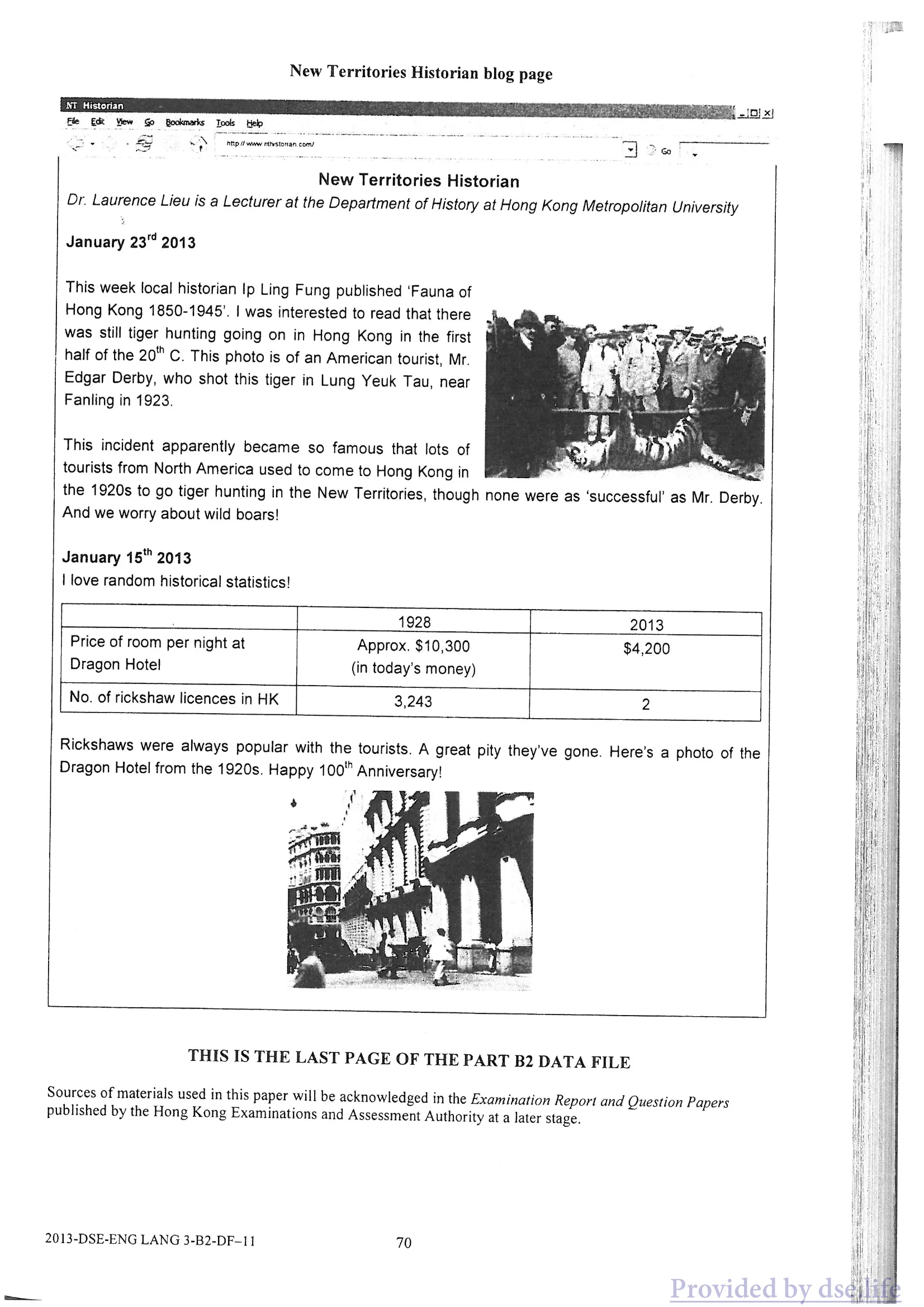
New Territories Historian blog page

NT Historian  File  Edit  View  Go  Bookmarks  Tools  Help
http://www.nthistorian.com/

New Territories Historian

Dr. Laurence Lieu is a Lecturer at the Department of History at Hong Kong Metropolitan University

January 23rd 2013

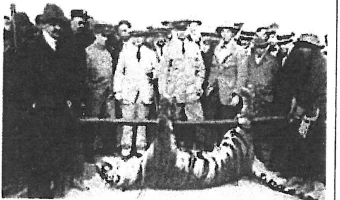
Original 1923 photograph of tourist Edgar Derby and a tiger near Fanling
Edgar Derby, Lung Yeuk Tau, 1923

This week local historian Ip Ling Fung published ‘Fauna of Hong Kong 1850-1945’. I was interested to read that there was still tiger hunting going on in Hong Kong in the first half of the 20th C. This photo is of an American tourist, Mr. Edgar Derby, who shot this tiger in Lung Yeuk Tau, near Fanling in 1923.

本週本地歷史學家葉嶺峰出版《1850–1945 年香港動物誌》。書中提到二十世紀上半葉香港仍有人獵虎。照片中的美國旅客 Edgar Derby 於 1923 年在粉嶺附近的龍躍頭射殺這頭虎。

This incident apparently became so famous that lots of tourists from North America used to come to Hong Kong in the 1920s to go tiger hunting in the New Territories, though none were as ‘successful’ as Mr. Derby. And we worry about wild boars!

事件十分轟動,1920 年代有很多北美旅客到新界獵虎,但都不像 Derby 先生那麼「成功」。如今我們反而擔心野豬!

January 15th 2013

I love random historical statistics!

我喜歡這些偶然發現的歷史統計數字!

19282013
Price of room per night at Dragon HotelApprox. $10,300
(in today’s money)
$4,200
No. of rickshaw licences in HK3,2432

Dragon Hotel 每晚房價:1928 年約相當於今天的 $10,300;2013 年 $4,200。香港人力車牌照數量:1928 年 3,243 個;2013 年 2 個。

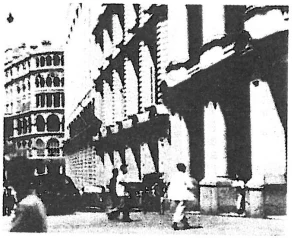
Rickshaws were always popular with the tourists. A great pity they’ve gone. Here’s a photo of the Dragon Hotel from the 1920s. Happy 100th Anniversary!

人力車以前很受旅客歡迎,可惜如今幾乎消失了。這裡附上一張 1920 年代 Dragon Hotel 的照片。祝它百週年快樂!

Original photograph of Dragon Hotel in the 1920s
Dragon Hotel, 1920s

THIS IS THE LAST PAGE OF THE PART B2 DATA FILE

核對原卷影像
Data File original page 20
原卷影像供核對文字和版面
Question-Answer Book · 第 1 頁
原生文字重建
HKDSE 2013 · ENGLISH LANGUAGE · PAPER 3 PART B2B2 · DIFFICULT SECTION

Task 8: Feature Article (18 marks)

Write a short feature article about travel and tourism in Hong Kong in the past using information from the B2 Data File and your notes. You should write around 150 words.

運用乙部二資料檔及筆記,撰寫短篇特寫,介紹昔日香港旅遊。約寫 150 字。

Hong Kong Tourism: The Way It Was

0 words

核對原卷影像
Question-Answer Book original page 32
原卷影像供核對文字和版面
Question-Answer Book · 第 2 頁
原生文字重建

Task 8 · Answer continuation

任務 8 續答頁

0 words

END OF TASK 8

核對原卷影像
Question-Answer Book original page 33
原卷影像供核對文字和版面
Question-Answer Book · 第 3 頁
原生文字重建

Task 9: Email to Queenie Lau (18 marks)

Write an email to Queenie Lau about the article she has sent using information from the B2 Data File. Write around 120 words.

運用乙部二資料檔的資料,電郵 Queenie Lau 談她提交的文章。約寫 120 字。

0 words

核對原卷影像
Question-Answer Book original page 34
原卷影像供核對文字和版面
Question-Answer Book · 第 4 頁
原生文字重建

Task 9 · Answer continuation

任務 9 續答頁

0 words

END OF TASK 9

核對原卷影像
Question-Answer Book original page 35
原卷影像供核對文字和版面
Question-Answer Book · 第 5 頁
原生文字重建

Task 10: Editorial (18 marks)

Write the editorial for the magazine using information from the B2 Data File and your notes. Write around 200 words.

運用乙部二資料檔及筆記,撰寫雜誌社論。約寫 200 字。

0 words

核對原卷影像
Question-Answer Book original page 36
原卷影像供核對文字和版面
Question-Answer Book · 第 6 頁
原生文字重建

Task 10 · Answer continuation

任務 10 續答頁

0 words

END OF TASK 10 · END OF PART B2

核對原卷影像
Question-Answer Book original page 37
原卷影像供核對文字和版面